Not everyone has to file taxes See if you do or if you may want to.
However, the company only recorded transactions that resulted in a debit balance of $9,000 to the cash account. The difference of $1,000 is what would be journalized as an adjusting entry and posted to the cash account T-account. It exists to ensure that the total debits equal the total credits, indicating that all transactions have been recorded accurately. T-accounts are a fundamental concept in accounting that helps in recording and analyzing financial transactions.
What is the approximate value of your cash savings and other investments?
T-accounts are surprisingly versatile tools used by a diverse group of people. While T-accounts provide a basic framework for recording transactions, they offer limited analytical capabilities for decision adjusting entries support. In today’s dynamic business environment, stakeholders demand comprehensive insights to drive strategic decisions and optimize performance.
Entrepreneurs and Small Business Owners
Additionally, they require manual entry and may not be as efficient in computerized accounting bookkeeping and payroll services systems. T-accounts primarily focus on current transactions and balances, providing limited historical context. While they track changes in account balances over time, they do not offer comprehensive historical data or audit trails. For instance, consider a service-based business that recognizes revenue when services are rendered, regardless of whether payment is received immediately.

How to Post Journal Entries to T-Accounts or Ledger Accounts

Inadequate historical context provided by T-accounts may complicate audit processes and raise questions about data integrity and compliance. T-accounts, those trusty tools of the accounting trade, are indeed quite helpful in illustrating the movement of funds within a business’s various accounts. But, like any tool, they have limitations, which are crucial to recognize to ensure accurate financial reporting and decision-making. As an independent financial adviser, I specialize in reviewing existing retirement plans and setting up tailored investment portfolios.

- We may earn a commission when you click on a link or make a purchase through the links on our site.
- Credits increase revenue because you’re recording income on account (crediting accounts receivable), which hasn’t been collected as cash yet but still represents income earned.
- They facilitate the recording and analysis of transactions, making it easier to prepare financial statements and understand the financial health of an organization.
- You’re a budding entrepreneur who just launched your dog walking service.
While T-accounts are a manual accounting tool, their compatibility with modern accounting software and technology is limited. Many accounting software solutions offer sophisticated features for automating bookkeeping processes, generating financial reports, and facilitating real-time analysis. This is consistent with the rules of debit and credit that have been previously mentioned. A T-account is a tool used https://www.bookstime.com/articles/what-are-t-accounts within a ledger to represent a specific account, while a ledger is a complete record of all financial transactions for a company. T-accounts can display transactions from a specific time period such as a week or a month. By displaying multiple transactions over a time period rather than a single transaction, it allows people to see a picture of a company’s activities.
For accountants and bookkeepers, T-accounts are the bread and butter of their daily routine. They use them to visually represent the flow of money through a business. Each T-account stands for a specific financial element, like cash, inventory, or accounts receivable. This limitation becomes apparent when preparing financial statements or conducting financial analysis requiring granular insights. Without detailed records, it’s challenging to accurately assess the financial health of an organization or comply with regulatory requirements. This purchase increases your supplies (an asset) but also decreases your cash (another asset).
- The ingredients for the cup of coffee are recorded as inventory (asset account).
- To check which stocks you can invest in, go to this link on the SGX website.
- You can invest your CPF savings in various instruments such as insurance products, unit trusts, fixed deposits, bonds, and shares.
- Debits and credits can be tricky initially, but they’re the foundation of understanding how businesses track their finances.
- His blog provides practical financial tips, strategies and resources to help people achieve financial freedom.
- Don’t worry, T accounts aren’t about to be replaced by robots (at least not entirely).
What can you invest in using your CPF?
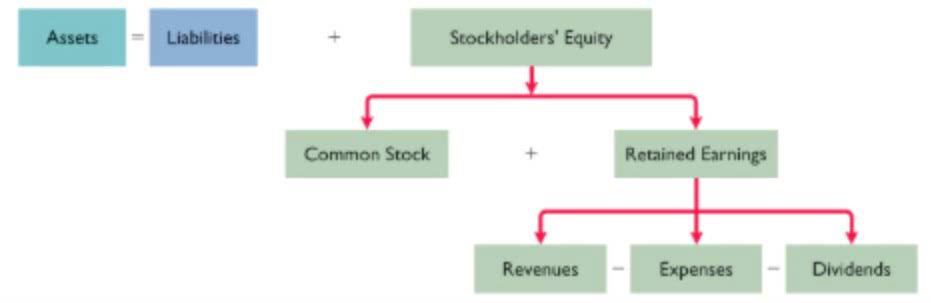
- As a refresher of the accounting equation, all asset accounts have debit balances and liability and equity accounts have credit balances.
- Businesses often require customized reports tailored to specific stakeholder needs, regulatory requirements, or industry standards.
- By displaying multiple transactions over a time period rather than a single transaction, it allows people to see a picture of a company’s activities.
- In this section, I’m going to go through different types of transactions, and I’ll be using T-accounts to display the movement of value through the business.
- A T-account is a visual way of displaying a set of financial records that use double-entry bookkeeping.
The process started in 2006, and only recently, sales charges have been scrapped for all CPF investments. It is important to note that you can only invest up to 35% of your investible savings from your Ordinary Account (OA) in stocks. Currently, no stocks are available for investment using your Special Account (SA) funds. Learn how to define, record, and benefit from T-Accounts in finance with clear examples and explanations. I’ve agreed to pay for the coffee machine next month so my accounts payable is increased (credited) by £700. Accounts payable is a liability account, keeping track of bills I still have to pay in future.